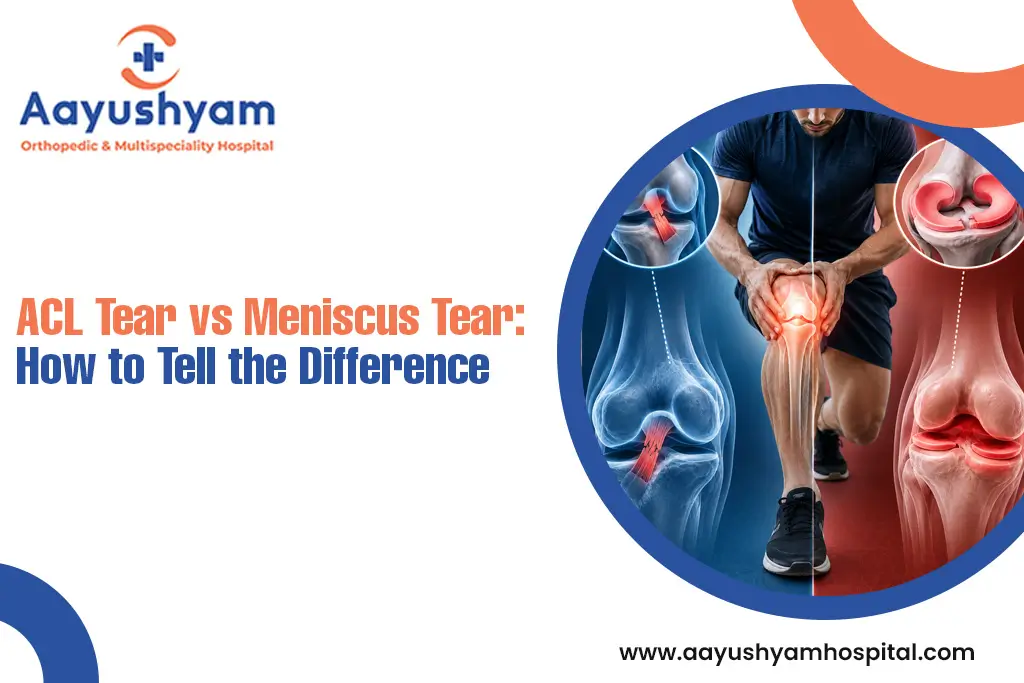
ACL Tear vs Meniscus Tear: How to Tell the Difference
A sudden twist on the sports field, an awkward landing, or even a wrong step getting up from a chair- knee injuries can happen in an instant. Two of the most common are an ACL tear and a meniscus tear. The tricky part is that they can feel remarkably similar. Both cause pain, swelling, and a knee that no longer moves the way it should. They may sound similar, but these are two different types of injuries, and each may require different treatment. Understanding the difference can help you recognize how serious the injury might be and when to see a specialist. This guide explains the key differences, but only a medical examination can confirm the exact diagnosis.
What ACL Tear?
The ACL (anterior cruciate ligament) is a strong band of tissue that connects your thigh bone to your shin bone. It keeps your knee steady when you pivot, turn, or change direction quickly. When it is injured, it can stretch, partially tear, or tear completely.
What is a Meniscus Tear?
The meniscus is a C-shaped piece of cartilage between the thigh bone and shin bone. It acts like a cushion, helping absorb shock, spread pressure, and keep the knee stable. A meniscus tear happens when this cartilage gets damaged or torn.
ACL Tear vs Meniscus Tear: How to Tell the Difference
The main difference between an ACL tear and a meniscus tear is that the ACL is a ligament that provides stability, while the meniscus is cartilage that acts as a cushion and helps absorb shock. This basic difference is why the two injuries can cause different symptoms and may require different treatments. If you have knee pain or suspect an injury, visiting an orthopedic doctor in Vadodara can help identify the cause through a physical examination and, when needed, imaging tests such as an MRI. An accurate diagnosis can help you get the right treatment sooner.
ACL Tear vs Meniscus Tear: How Each Injury Happens
ACL tears usually happen during high-speed, high-force movements such as a sudden stop, a sharp pivot, an awkward landing from a jump, or a direct blow to the knee. They are common in sports like football, basketball, and skiing, but falls and road accidents can cause them too.
Meniscus tears often happen when the knee twists while the foot stays planted, especially when the knee is bent. This can occur during sport, but also during ordinary movements like twisting to stand up or squatting. In older adults, the meniscus naturally becomes thinner and weaker with age, so it can tear with very little force.
What Each Injury Feels Like
The symptoms can give you some clues about the type of knee injury, although only a medical evaluation can confirm the diagnosis.
An ACL Tear Often Happens Suddenly:
➤ You may hear or feel a clear “pop” when the injury occurs.
➤ Swelling can develop quickly, sometimes within a few hours.
➤ Your knee may feel unstable or weak, as if it might give way.
➤ Walking, putting weight on the leg, or continuing an activity may become difficult.
A Meniscus Tear May Feel Different:
➤ Pain is often felt along the inside or outside of the knee.
➤ Swelling may develop gradually over several hours or even a couple of days.
➤ Your knee may catch, click, or lock when you move it.
➤ Pain may become worse when squatting, twisting, or bending the knee deeply.
If you are unsure what is causing your symptoms, the best orthopedic hospital in Vasna, Aayushyam, can examine your knee, assess your symptoms and movement.
ACL Tear Vs. Meniscus Tear at a Glance
| Condition | ACL Tear | Meniscus Tear |
| Structure involved | Ligament (stability) | Cartilage (cushioning) |
| Typical cause | Sudden pivot, stop, jump, or blow | Twisting on a planted foot; age-related wear |
| "Pop" at injury | Often | Sometimes |
| Onset of pain | Immediate and intense | May build over hours |
| Swelling | Usually rapid | Often gradual |
| Locking or catching | Uncommon | Common |
| Knee giving way | Common | Possible |
| Bearing weight | Often difficult right away | May still be possible at first |
When to See an Orthopedic Specialist
Not every knee injury needs immediate specialist care, but certain symptoms should not be ignored. Consider seeing a knee doctor in Vadodara if you have:
➤ A “pop” when the injury happened, followed by rapid swelling
➤ Pain or swelling that does not improve after a few days of rest and ice
➤ Difficulty fully bending or straightening your knee
➤ A knee that locks, catches, or feels unstable
➤ Trouble putting weight on the affected leg
Get Your Knee Assessed at Aayushyam Hospital
If you have hurt your knee and aren't sure how serious it is, it's always safer to have it checked. At our orthopedic department at Aayushyam Orthopedic and Multispeciality Hospital, our specialists diagnose and treat ACL and meniscus injuries using detailed clinical examination and advanced imaging, and guide you through the right treatment and rehabilitation for your knee and your lifestyle. Don't wait for a minor knee problem to become a lasting one. Book an appointment with Aayushyam Hospital today for an accurate diagnosis and expert care.