Understanding the Joint Replacement Surgery Recovery Time
Joint Replacement Surgery has been transforming lives of the people around the globe. Whether it is total knee replacement or hip replacement, the joint replacement surgery has been considered a boon for the people suffering from various diseases such as arthritis. The joint replacement surgery recovery time vary depending on the factors age, health, the joint that is replaced and the rehab. In this blog let’s break down the joint replacement surgery recovery time.
How Long to Recover from Knee Replacement
Knee replacement surgery typically takes up to 6-12 months to recover fully. At Aayushyam Orthopedic & Multispeciality Hospital, patients gradually return to their normal activities after the surgery. Recovery in the first few weeks after knee replacement surgery focuses on pain control, swelling management, and adjusting to limited mobility.
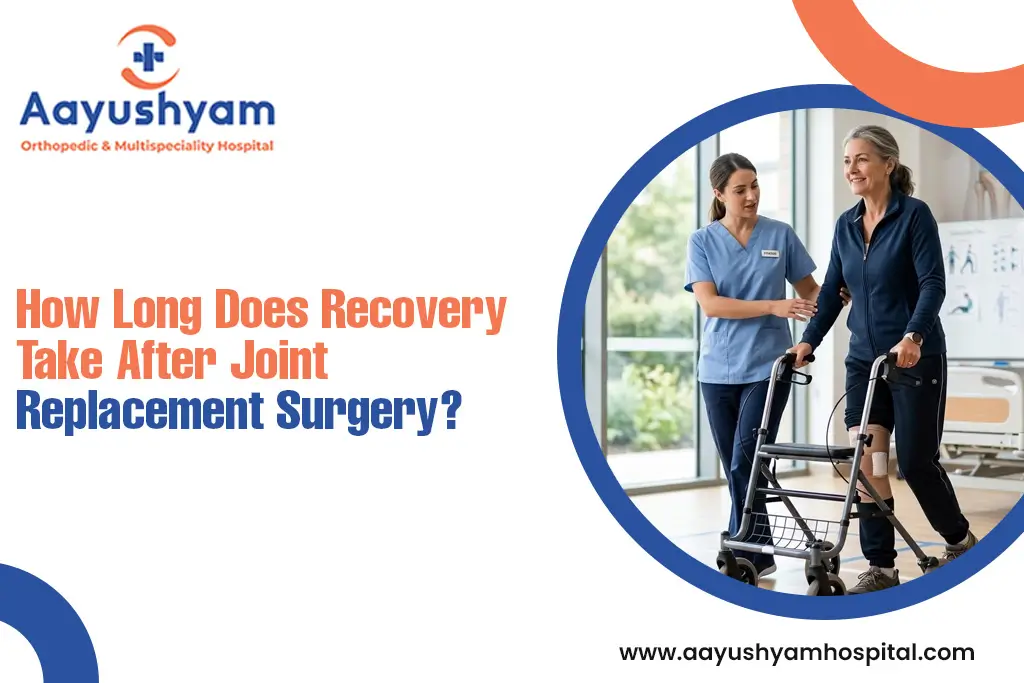
Initially, the patient has limited mobility and can start walking with the help of a walker for a few weeks and then can switch to crutches as the pain reduces. The knee replacement surgery recovery requires blending with the rehabilitation activity for speedy recovery. Patients are advised to follow knee replacement rehabilitation exercises post-surgery.
Hip Replacement Recovery Timeline
Hip replacement recovery timeline is often quicker than the knee due to larger muscles supporting stability. The hip replacement recovery may demand 6- 12 weeks time to fully recover. Post-surgery, the patient must follow an exercise routine. For the initial 6 weeks of the hip replacement surgery, it is advisable not to bend the hips more than 90 degrees.
Total Knee Replacement Recovery Stages
The total knee replacement recovery stage starts right after the surgery. Patients are encouraged to walk with a supportive device to avoid any kind of stiffness and eliminate the chances of blood clotting. Following total knee replacement surgery, rehabilitation can help patients get back on their feet and resume an active lifestyle.
As the recovery shows positive signs, the knee gains better flexibility, and the patient may start walking independently. After 12 weeks, the recovery is at its core, and patients can now move and perform daily activities independently. The knee starts to feel more flexible, and movements become easy.
| Stage | Knee Replacement | Hip Replacement |
| Day 0–3 | Pain, swelling; walk with support | Walk within 24–48 hrs with support |
| Week 1–3 | Limited mobility; start basic exercises | Gradual movement; assisted walking |
| Week 4–6 | Better movement; shift to cane | Improved mobility; less support |
| Week 7–12 | Walk independently; resume daily tasks | Smooth walking; routine activities |
| 3–6 Months | Stronger joint; moderate activities | Active lifestyle; minimal pain |
| 6–12 Months | Full recovery; max strength | Near-normal function |
How to Walk After Joint Replacement
A key concern for patients is how to walk after joint replacement safely and confidently.
Early Stage:
- Use a walker or crutches.
- Take slow, controlled steps.
- Follow weight-bearing instructions from your doctor.
Mid Recovery:
- Transition to a cane.
- Focus on maintaining balance and posture.
Advanced Stage:
- Walk independently.
- Gradually increase distance and speed.
Tips for Safe Walking:
- Wear supportive footwear.
- Avoid uneven surfaces.
- Take breaks when needed.
Learning proper walking techniques ensures faster recovery and prevents strain on the new joint.
Orthopedic Surgery Recovery Tips
The recovery after any orthopedic surgery, such as hip replacement, knee replacement, or any joint replacement surgery, requires a lot of attention, care and patience. Following the right orthopedic surgery recovery tips can significantly improve the healing speed and reduce the complications after surgery. The postoperative care is vital for a smooth recovery. Below are a few orthopedic surgery recovery tips:
- Being Consistent with Rehabilitation: Rehabilitation is a non-negotiable part of the recovery. Rehab helps patients increase mobility, flexibility, and strength post-surgery.
- Managing Pain & Mobility: Pain and Swelling are common. Take the prescribed medications and apply ice packs regularly.
- Rest: While mobility is important, rest is as important as our body needs time to heal. Maintain a balance between rest and staying active.
- Keeping the Incision Clean: It is necessary to keep the incision clean and dry. Any mishaps in the incision area may lead to serious infections and can worsen the situation.
- Balanced Diet: Eating helps your body get all the required nutrients and vitamins, helping in the healing process. Protein is almost necessary for repairing damaged tissues.
Following these orthopedic surgery recovery tips, along with proper joint replacement post-op care and consistent rehabilitation, ensures a smoother and faster recovery. With the right approach by the best Orthopedic & Multispeciality Hospital in Vadodara, you can regain mobility, reduce pain, and return to your daily activities with confidence.
Conclusion:
Recovering from joint replacement surgery is a journey that requires patience, consistency, and proper care. While the joint replacement surgery recovery time varies from person to person, most patients can expect significant improvement within 3 months and full recovery within a year. By following the tips backed by the best Orthopedic Hospital in Vadodara, you can regain mobility, reduce pain, and return to an active, fulfilling life.