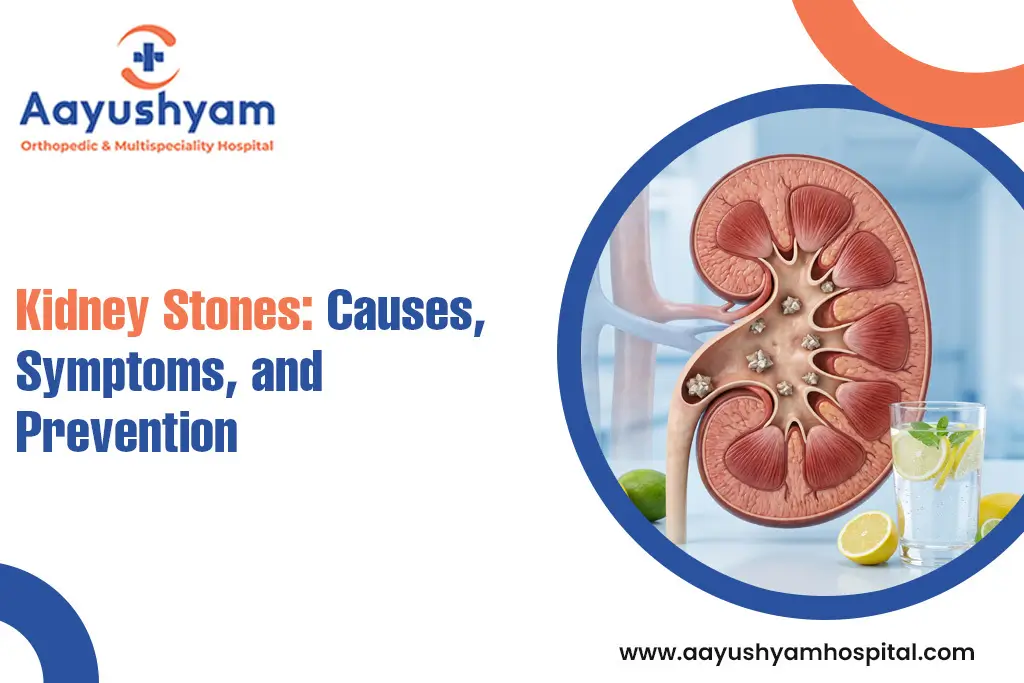
Kidney Stones: Causes, Symptoms, and Prevention
Kidney stones can form when minerals and salts in urine build up and turn into deposits, inside the kidneys. According to Aayushyam Orthopedic & Multispecialty Hospital, understanding the causes, symptoms, and risk factors of kidney stones can help people recognize warning signs early and seek timely medical care. Some of these stones pass out of the body on their own through urine. Others can cause a lot of pain, block the flow of urine or need help. Knowing the signs early and understanding what makes someone more likely to get them can help people get care when they need it. This also helps lower the chance of getting kidney stones.
What Are Kidney Stones?
Kidney stones are clumps formed from minerals and salts that gather in the urinary system. They can be very small, like a grain of sand. It grows big enough to block the flow of urine. Sometimes these stones stay in the kidney. Don’t cause any symptoms at all. Pain usually starts when a stone moves into the ureter, which is the narrow tube that carries urine from the kidney to the bladder.
What Causes Kidney Stones?
Kidney stones often develop when urine has many minerals that can form stones for the amount of fluid in the urine to handle. These minerals can create crystals that slowly get bigger and turn into stones. Many things can make the chance of getting kidney stones :
➤ Dehydration: When you do not drink enough water your urine becomes more concentrated. This encourages crystals to form, which can lead to stones.
➤ Salt Intake: Excess salt can raise the amount of calcium that leaks into urine. High salt intake can therefore increase stone risk.
➤ Dietary Habits: Some eating patterns, such as eating much animal protein may raise the risk of certain stones. Dietary habits that include animal protein can be a problem.
➤ Family History: People who have kidney stones in their family or in themselves are more likely to develop stones again. Family history is an indicator of risk.
➤ Medical Conditions: Obesity, gout, some digestive problems and certain urinary infections can raise the risk. Medical conditions such as these increase stone chances.
➤ Certain Medicines and Supplements: Some drugs and dose supplements can help stones form. Certain medicines and supplements can contribute to stone formation.
Kidney stones do not have one single cause. The risk depends on a combination of individual health, hydration, diet, and other factors.
Types of Kidney Stones
Not all kidney stones are the same. They can form from minerals and substances in the urine. Knowing which type of kidney stone you have helps your doctor understand what caused it and recommend the treatment. It can also help you take steps to prevent stones from forming
Here are the four common types of kidney stones:
1. Calcium Stones
Calcium stones are the common type of kidney stone. Most contain calcium oxalate a substance found naturally in the body and in foods such as spinach, nuts and chocolate. When much calcium or oxalate builds up in the urine crystals can form and gradually develop into stones. Some calcium stones contain calcium phosphate. May be linked to certain medical conditions or medicines.
2. Uric Acid Stones
Uric acid stones can form when urine contains much uric acid or becomes too acidic. They are more likely to develop in people who do not drink fluids eat a diet high in animal protein or have conditions such as diabetes or metabolic syndrome. Certain digestive problems and genetic factors can also increase the risk.
3. Struvite Stones
Struvite stones usually develop because of a urinary tract infection (UTI). They can grow quickly. Become quite large sometimes without causing noticeable symptoms in the early stages. Getting the infection diagnosed and treated is important to help manage this type of stone and prevent complications.
4. Cystine Stones
Cystine stones are less common and occur because of an inherited condition called cystinuria. This condition causes the kidneys to release much cystine, a naturally occurring substance into the urine. Over time cystine can form crystals. Develop into stones. People, with this condition may need medical care to reduce the risk of stones returning.
Why Is Knowing Your Kidney Stone Type Important?
Each type of kidney stone may have causes and prevention needs. If you pass a kidney stone your doctor may ask you to save it for testing. The results can help guide changes, medication and other steps to reduce the chance of developing kidney stones again.
What Are the Risk Factors for Kidney Stones?
Anyone can get kidney stones. Some habits, medical issues and family background can make it more likely. Knowing what increases the risk can help you take care of your kidneys. You may be more likely to develop kidney stones if you:
➤ Don't Drink Water: Not getting enough fluids means your urine becomes more concentrated. This can let crystals form and grow into stones.
➤ Eat Much Protein: Eating a lot of meat and other animal-based proteins may raise the chance of kidney stones.
➤ Too Much Salt Or Sugar: Foods that are high in sodium or added sugars can increase the risk of kidney stones in some people.
➤ Take Doses Of Vitamin C: Taking much vitamin C in supplement form may raise oxalate levels in urine which can lead to some types of stones.
➤ Family History: If your parents or siblings have had kidney stones you might be more likely to get them
➤ Tract Blockage: If something blocks urine flow it can help stones form easily.
➤ Undergone Surgery: Surgeries, like bypass can change how the body absorbs nutrients and may raise the risk of kidney stones.
➤ Medicines: Some diuretics, calcium-based antacids and antiseizure drugs may increase the risk of types of stones depending on the medicine and your health.
➤ Medical Conditions: Being overweight having diabetes, gout, digestive problems or urinary tract infections can make kidney stones more likely.
Having one or more risk factors does not mean you will definitely get kidney stones. Staying well hydrated, eating a diet and talking to your doctor about your personal risks can help you take the right steps to keep your kidneys healthy.
Common kidney stones symptoms
Small kidney stones might not cause any signs at all. Sometimes people find out about them while getting tests, for something. Most of the time symptoms show up when the stone starts moving into the ureter. This can block the flow of urine. Cause pain or other problems.
➤ I notice pain in the back or side below the ribs
➤ I notice pain that spreads to the lower abdomen or groin
➤ I notice pain that comes in waves and changes, in intensity
➤ I notice burning or discomfort while urinating
➤ I notice frequent urination or only small amounts of urine
➤ I notice pink, red or brown urine caused by blood
➤ I notice kidney stone pain causing vomiting
When should you go to a doctor? Severe pain, fever with chills, repeated vomiting, blood, in the urine or difficulty passing urine requires medical attention. Fever that comes with a blockage can be a sign of a very serious infection and needs emergency treatment. If these symptoms show up see a doctor or try home remedies. Always take these issues seriously. Get help from a doctor.
How Are Kidney Stones Diagnosed?
A doctor will look at the patient’s symptoms, history, how much water they drink in a day and if they’ve had kidney stones before. This helps decide which tests to do.
Urine tests can show if there is blood, infection or substances that lead to stone formation. These are easy to do and give clues. Blood tests help check how well the kidneys are working. They also look at levels of minerals and uric acid which can be high in people, with stones.
Imaging tests like ultrasound or CT scans can find the stone. They show how big it is and where it is. This is important if it’s blocking the flow of urine.
People looking for a General Physician Near Me Gotri should get an evaluation. This can help find the cause of their symptoms. The doctor can also decide if they need to see a specialist. At Aayushyam Orthopedic & Multispecialty Hospital, a quick medical assessment can guide the tests and treatment plan. It helps get answers and makes care easier to manage.
Treatment Options for Kidney Stones
Treatment depends on the stone’s size, location, composition. Whether there are any complications. Not every kidney stone needs surgery.
➤ Small Stones: Some can pass on their own with plenty of fluids, pain relief and regular check-ups from a doctor.
➤ Medication: Doctors may give painkillers or certain medicines to help break down or pass types of stones. Stone-breaking Procedures: Shock wave lithotripsy uses waves to break up certain stones into tiny pieces that can pass more easily.
➤ Surgical Procedures: Larger stones, ones that block the tract cause infection or won’t pass naturally may need a procedure to remove or break them.
A Laparoscopic Surgery Hospital in Vasna might be a place to consider if surgery is needed but not all kidney stone treatments are laparoscopic. The right method depends on the stone and the person’s health. Aayushyam Orthopedic & Multispecialty Hospital Vadodara guides patients to learn about their treatment options. When specialist care is needed.
How to Prevent Kidney Stones
Although not every kidney stone can be prevented, certain habits can reduce the risk of developing them.
1. Drink Enough Water in a Day: Keep sipping fluids regularly through the day. People who sweat a lot or live in places may need more water. Those with kidney or heart problems should follow their doctor’s advice about how much fluid's safe.
2. Reduce Salt: Much sodium can raise the chance of forming certain stones. Cut back on salty processed foods and don’t add too much salt to your meals.
3. Maintain a Diet Eat Plenty of Fruits and Vegetables: Keep your protein and other nutrients in balance. Don’t cut out calcium- foods unless your doctor says so because regular dietary calcium can actually help lower the risk of some types of stones.
4. Maintain a Weight: Stay active, eat well to keep your body working smoothly.
5. Follow Advice: If you get stones more than once, doctors may suggest testing a stone you passed or doing tests. Prevention might mean changing your diet or taking medicine depending on the kind of stone you get.
When Should You Consult a Doctor?
Do not ignore repeated side pain or back pain changes in urine color, painful urination or recurring urinary symptoms. Seek emergency care if severe pain happens along with fever, chills, persistent vomiting or difficulty passing urine.
For people looking for a General Physician Near Me Vasna a consultation can help find out if symptoms need urine tests, imaging or a referral, to a specialist. Aayushyam Orthopedic & Multispecialty Hospital supports medical assessment instead of waiting until symptoms get worse.
Conclusion
Kidney stones can be painful, but timely medical care and a few everyday changes can help manage the condition and lower the risk of future stones. Drinking enough water, limiting excess salt, and following your doctor's advice are important steps towards protecting kidney health. If you notice persistent back pain, blood in your urine, or discomfort while urinating, do not ignore these signs.
At Aayushyam Orthopedic & Multispecialty Hospital, patients can seek medical guidance to understand their symptoms and explore suitable treatment options. Getting the right advice early can help prevent complications and support better long-term health.
Frequently Asked Questions
1. Can kidney stones pass naturally?
Yes, Small kidney stones can pass on their own through the tract. If the stones are big or causing blockages or infections medical help might be needed.
2. Does drinking water prevent kidney stones?
Drinking water helps prevent kidney stones. It makes the urine less concentrated which can stop stones from forming. How much water you need depends on your body and lifestyle.
3. Are kidney stones always painful?
Not always. Some people have kidney stones. Don’t feel anything until the stone moves or blocks the flow of urine. Then the pain starts.
4. Can kidney stones come back?
Yes, kidney stones can come back. If you’ve had them before you’re more likely to get them. That’s why doctors often suggest check-ups and ways to lower your risk.
5. When are kidney stones an emergency?
Go to the hospital if you have pain, fever, with chills, keep vomiting or can’t pee. These signs mean the stone might be causing a problem.