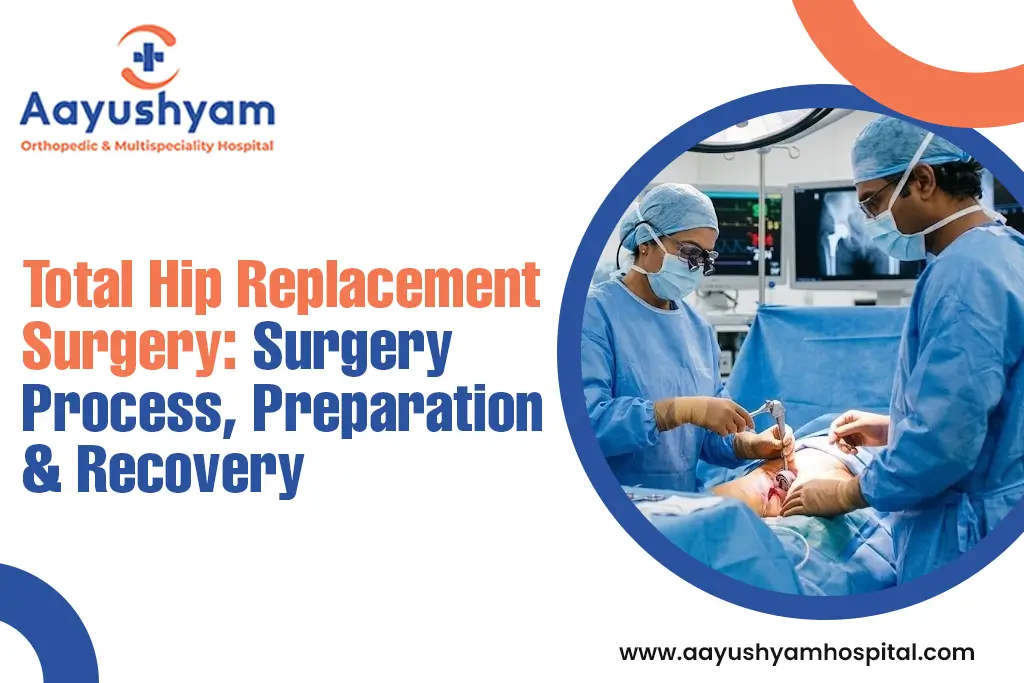
Total Hip Replacement Surgery: Surgery Process, Preparation & Recovery
Continuous pain, stiffness and limited mobility can make everyday life challenging. The reason for the underlying pain can be due to arthritis, injuries or age-related factors. When non-surgical treatment no longer relieves pain, hip replacement surgery, known as total hip replacement surgery (THR), is considered. This is a surgical procedure that aims to alleviate pain and restore mobility in patients suffering from severe hip joint impairment.
At Aayushyam Orthopedic & Multispeciality in Vadodara, we combine the latest surgical techniques and modern equipment, with personalized care. If you are researching the hip replacement surgery process, including preparation steps, recovery timeline, risks, and success rate, this comprehensive guide is designed to answer all your questions in one place.
What is Total Hip Replacement Surgery?
Total Hip Replacement Surgery, medically known as total hip arthroplasty, is a surgical procedure in which a damaged hip joint is replaced with an artificial implant. The hip joint is a ball-and-socket joint. During surgery:
➤ The damaged femoral head (ball) is removed.
➤ The worn-out cartilage in the socket is cleaned and replaced.
➤ Artificial components made of metal, ceramic, or high-grade plastic are inserted.
Modern implants are designed to last 15 to 25 years or more, making this one of the most successful orthopedic procedures worldwide.
Read: What Causes Knee Pain in Winter?
When Do You Need a Hip Replacement?
Total hip replacement surgery is typically recommended for patients experiencing severe pain and mobility issues affecting the hip joint. The common conditions that may lead to the need for a total hip replacement are:
#1 Severe Osteoarthritis
Osteoarthritis is the most frequent cause of hip replacement. Over time, the protective cartilage that cushions the hip joint wears away. This results in bone-on-bone friction, leading to persistent pain, joint stiffness, swelling and reduced flexibility. As the condition progresses, it might bring along pain and significantly limited mobility.
#2 Rheumatoid Arthritis
Rheumatoid arthritis is an autoimmune condition that causes chronic inflammation of joints. In the hip, this inflammation can slowly damage cartilage and bone, leading to joint deformity, continuous discomfort and reduced range of motion. When on-the-counter medications and other treatments fail to control symptoms, surgery may be necessary.
#3 Hip Fracture
A severe hip fracture, especially in older adults, can disrupt normal joint function. In cases where the joint cannot be repaired effectively, hip replacement may be the safest and most reliable treatment option to restore mobility and prevent complications.
#4 Avascular Necrosis
Avascular necrosis occurs when the blood supply to the femoral head (the ball of the hip joint) is reduced or blocked. Without proper blood flow, bone tissue begins to die and collapse. This leads to joint damage, severe pain, and eventual loss of function. Hip replacement is often required in advanced stages.
Signs You Should Consult a Specialist
You should consider consulting a qualified hip specialist in Vadodara if you experience:
➤ Pain that persists even while resting
➤ Difficulty walking short distances
➤ Limping or instability while standing
➤ Stiffness that restricts bending or rotation
➤ Pain that interferes with sleep
➤ Difficulty performing daily activities like dressing or climbing stairs
Ignoring these symptoms can lead to further joint deterioration and muscle weakness, especially for bone health after 40. Early evaluation helps determine whether surgery is necessary or if other treatment options may still be effective.
What are the Different Types of Total Hip Replacement Surgeries?
➤ Cemented Total Hip Replacement: In a cemented hip replacement, a special medical-grade bone cement is used to attach the artificial implant to the existing bone. It is suitable for older patients, individuals with weaker or osteoporotic bones and patients with lower activity levels.
➤ Uncemented Total Hip Replacement: In uncemented (cementless) hip replacement, the implant is designed to allow natural bone growth into its porous surface. Instead of using cement, the implant achieves stability through biological fixation. It is suitable for younger patients, individuals with strong & healthy bones and more active patients.
➤ Minimally Invasive Total Hip Replacement: Minimally invasive hip replacement focuses on reducing surgical trauma by using smaller incisions and preserving surrounding muscles. However, this technique requires advanced surgical expertise and may not be suitable for all patients, especially those with severe joint deformity.
➤ Anterior Approach: The anterior approach involves accessing the hip joint from the front of the body. This approach requires specialized training and equipment.
➤ Posterior Approach: The posterior approach is one of the most commonly used techniques worldwide. The surgeon accesses the hip joint from the back.
Each of these surgeries has its own benefits and considerations. The choice of method depends on the patients antomy and the specific goals of the surgery. The orthopedic surgeon in Vadodara works closely with patients to determine the best approach for their individual case.
Read: How to Keep Joints Healthy
How Is the Right Type Chosen?
The choice between cemented, uncemented, minimally invasive techniques, and surgical approach depends on:
➤ Age
➤ Bone quality
➤ Lifestyle and activity level
➤ Severity of joint damage
➤ Surgeon’s expertise
➤ Overall medical condition
A detailed evaluation and imaging tests help determine the safest and most effective option for each patient.
Total Hip Replacement (THR): Step-by-step Procedure
Understanding the surgical process can help alleviate anxiety and prepare the pateints for what to expect and prepare better.
Step 1: Anesthesia
➤ Spinal or general anesthesia ensures a pain-free procedure.
Step 2: Surgical Incision
➤ The surgeon accesses the hip joint through a controlled incision.
Step 3: Removal of Damaged Tissue
➤ The diseased bone and cartilage are removed.
Step 4: Implant Placement
➤ The artificial socket is placed in the pelvic bone.
➤ A metal stem is inserted into the thigh bone.
➤ The new ball component is attached.
Step 5: Closure
➤ The incision is closed with sutures or staples.
➤ The entire surgery usually takes 90 to 120 minutes.
How to Prepare for a Total Hip Replacement Surgery?
Preparing for THR involves various steps to ensure a successful result.
#1 Medical Preparation
➤ Blood tests and ECG
➤ Imaging (X-rays, MRI)
➤ Medication review
➤ Managing diabetes or blood pressure
#2 Physical Preparation
➤ Pre-surgery strengthening exercises
➤ Improving upper body strength (for walker support)
➤ Consulting a physiotherapist in Vadodara
#3 Home Preparation
➤ Install grab bars in bathrooms
➤ Arrange elevated seating
➤ Remove tripping hazards
➤ Prepare assistance for the first 1–2 weeks
Consulting a qualified hip doctor in Vadodara ensures your pre-operative plan is personalized.
Recovery Timeline After Total Hip Replacement
| Time Period | What Happens | Activity Level |
| Day 1–2 | Begin assisted walking | Walker support |
| Week 1 | Pain controlled, discharge | Light indoor movement |
| Week 3–4 | Reduced swelling | Increased walking distance |
| 6 Weeks | Improved flexibility | Driving possible |
| 3 Months | Stronger joint | Daily routine resumed |
| 6–12 Months | Complete healing | Active lifestyle |
While most patients follow a similar healing pattern, the speed of recovery depends on age, overall health, bone quality, physical fitness, and adherence to rehabilitation guidelines. However, every patient’s recovery journey is unique. Factors such as age, pre-existing medical conditions, muscle strength, type of surgical approach, and commitment to physiotherapy can significantly influence healing time. Some patients may recover faster, while others may require additional time and rehabilitation support.
Risks and Complications
Although highly successful, potential risks include:
➤ Infection
➤ Blood clots
➤ Dislocation
➤ Implant loosening
➤ Nerve injury
With experienced surgeons and proper post-operative care, complication rates are low.
Success Rate of Total Hip Replacement
Total Hip Replacement has a success rate of over 90–95%. Most patients experience:
➤ Significant pain relief
➤ Improved joint movement
➤ Better quality of life
➤ Long-lasting implant durability
Regular follow-ups ensure long-term success.
Why Patients in Vadodara Trust Aayushyam Orthopedic & Multispecialty Hospital?
Aayushyam Orthopedic & Multispecialty Hospital has built a reputation for delivering advanced bone and joint care with a patient-first approach. As the best orthopedic hospital in Vadodara, we offer:
➤ Experienced orthopedic surgeons
➤ Modern operating theatres
➤ ICU and trauma care support
➤ Structured rehabilitation programs
➤ Personalized treatment planning
If chronic hip pain is limiting your mobility and affecting your quality of life, it’s time to seek expert care. At Aayushyam Orthopedic & Multispecialty our experienced orthopedic doctors provide advanced diagnosis, personalized treatment plans, and comprehensive rehabilitation support to ensure the best possible outcomes. Don’t let hip pain control your life. Contact us today and take the first step toward a stronger, pain-free future.
Frequently Asked Questions
How long does hip replacement surgery take?
➤ About 1.5–2 hours.
Is hip replacement very painful?
➤ Pain is controlled with medication and reduces significantly after recovery.
How long does recovery take?
➤ Most patients resume normal routine within 6–12 weeks.
How long does the implant last?
➤ 15–25 years or more.
Can elderly patients undergo this surgery?
➤ Yes, if medically fit.