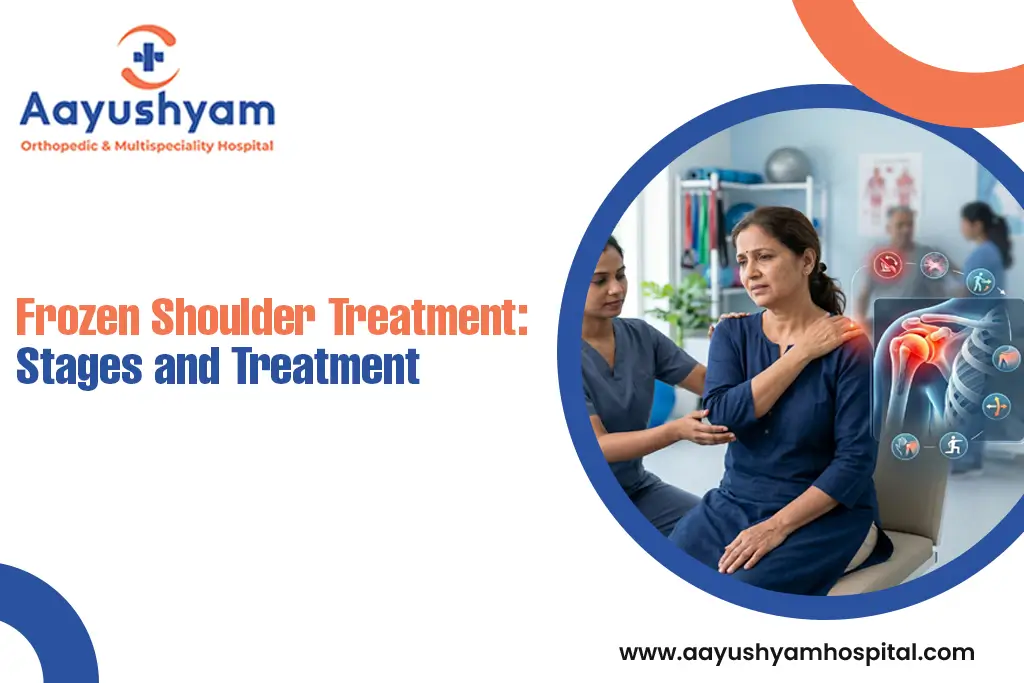
Frozen Shoulder Treatment: Stages and Treatment
Frozen shoulder, also known as adhesive capsulitis, often causes pain, stiffness and limited movement in the shoulder. This condition progresses slowly and restricts everyday tasks like reaching overhead or simply sleeping. In this blog, we learn everything about frozen shoulder causes, symptoms and treatment to live a pain-free and fulfilling life.
What is a Frozen Shoulder?
Medically known as adhesive capsulitis, frozen shoulder occurs when the connective tissue capsule surrounding the shoulder joint thickens, tightens, and forms adhesions, gradually restricting both active and passive movement. Frozen shoulder commonly affects adults between 40 and 65 years of age, and women are affected more often than men. People with diabetes, thyroid disorders, or those recovering from prolonged shoulder immobilisation (after surgery, fracture, or a stroke) are at higher risk. While the condition often improves on its own over one to three years, the right treatment by an experienced orthopedic doctor in Gotri at the right stage can significantly reduce pain, shorten recovery time, and prevent long-term stiffness.
Meaning of Frozen Shoulder
The term frozen shoulder means adhesive capsulitis. It is the development of capsular restriction, which makes the shoulder stiff and painful. As the capsule tightens, the shoulder joint gets inflamed, thickens and restricts joint movement.
What are the Causes of Frozen Shoulder?
While there is no known reason for frozen shoulder, this is why it is called idiopathic. Conditions that bring immobilisation or trauma, OA & RA, can lead to secondary frozen shoulders. People with diabetes are at higher risk of developing frozen shoulder. The onset of a frozen shoulder generally occurs between 40 and 65 years of age.
The 3 Stages of Frozen Shoulder
Frozen shoulder typically progresses through three overlapping stages. Recognising which stage you're in helps your orthopedic surgeon in Vasna decide the most appropriate treatment approach.
Stage 1: Freezing Stage (Painful Stage)
Duration: 2 to 9 months
This stage begins gradually, often without any injury. Pain develops around the shoulder, tends to worsen at night, and gradually limits the shoulder's range of motion. Even simple tasks like reaching behind the back or lifting the arm overhead become painful.
- Dull, aching pain that intensifies with movement
- Disturbed sleep due to pain when lying on the affected side
- Progressive loss of motion in multiple directions
Read: Total Hip Replacement Surgery
Stage 2: Frozen Stage (Stiffening Stage)
Duration: 4 to 12 months
Pain may start to ease during this stage, but stiffness becomes the dominant problem. The shoulder capsule tightens further, and everyday activities such as dressing, driving, or reaching across the body become noticeably restricted.
- Significant reduction in shoulder mobility
- Muscle weakness due to disuse
- Pain mainly at the extremes of movement
Stage 3: Thawing Stage (Resolution Stage)
Duration: 6 months to 2 years
The shoulder capsule gradually loosens, and movement slowly returns. Recovery during this stage can be slow and uneven, but with consistent physiotherapy, most people regain a large part of their shoulder function.
- Gradual improvement in range of motion
- Reduced pain with daily activities
- Continued strengthening needed to restore full function
Why Early Diagnosis Matters
The total course of frozen shoulder can run anywhere from one to three years. Studies show that with consistent treatment, many patients recover meaningful function within 12 to 18 months, while a portion of patients can be left with some residual stiffness if left unaddressed. Consulting an orthopedic specialist in Vadodara early, especially during the freezing stage, allows treatment to be tailored to your specific stage and helps prevent the stiffness from becoming severe.
Treatment Options at Each Stage
Treatment for frozen shoulder is largely non-surgical and is matched to the stage of the condition. At Aayushyam Orthopedic & Multispeciality Hospital in Vadodara, our orthopedic specialists assess your shoulder's range of motion, pain pattern, and underlying risk factors (such as diabetes) before recommending a treatment plan.
| Stage | Primary Goal | Common Treatment |
| Freezing | Control pain & preserve motion | Anti-inflammatory medication, activity modification, gentle stretching, intra-articular steroid injection. |
| Frozen | Restore range of motion | Structured physiotherapy, mobility exercises, hydrodilatation with steroid injection, pain management. |
| Thawing | Rebuild strength & function | Progressive stretching, strengthening exercises, continued physiotherapy. |
| Resistant cases | Restore mobility surgically | Manipulation under anaesthesia or arthroscopic capsular release. |
Non-surgical Treatments
For most patients, frozen shoulder responds well to a combination of conservative measures:
- Physiotherapy: Gentle, stage-appropriate stretching and mobility exercises form the foundation of recovery. During the freezing stage, physiotherapy doctor in Bhayli emphasizes exercises that focus on maintaining motion without pushing through sharp pain, while the thawing stage incorporates progressive strengthening.
- Medications: Anti-inflammatory and pain-relief medications help manage discomfort, particularly during the painful freezing stage.
- Intra-articular Steroid Injections: Injecting corticosteroids directly into the shoulder joint can reduce inflammation and pain, often improving the effectiveness of physiotherapy.
- Hydrodilatation: A procedure combining a steroid injection with fluid to gently stretch the tightened joint capsule, which can help restore movement in the frozen stage.
- Heat and Cold Therapy: Used alongside exercises to ease pain and muscle tension before and after stretching sessions.
Surgical Treatment
When a patient does not respond to 6 to 9 months of conservative treatment, surgical options may be considered:
- Manipulation Under Anaesthesia: The shoulder is gently moved through its full range of motion while the patient is under anaesthesia, to break up adhesions and restore mobility.
- Arthroscopic Capsular Release: A minimally invasive procedure where the tightened portions of the joint capsule are surgically released using small instruments inserted through tiny incisions.
Both procedures are generally considered similarly effective, and your orthopedic surgeon in Vadodara will recommend the most suitable option based on your shoulder's condition, overall health, and recovery goals.
Read More: Hospital in Vadodara News & Blog
Don’t Let Shoulder Stiffness Limit You
If shoulder pain or stiffness is affecting your daily routine, consult our orthopedic specialists in Vadodara, Dr. Uday Meghnathi and Dr. Sumit Dabhi, at Aayushyam Orthopedic & Multispeciality Hospital for a personalised assessment and treatment plan. Call us to book an appointment.
FAQs
1. Can frozen shoulder heal on its own without treatment?
➤ Frozen shoulder is often self-limiting and can improve gradually over one to three years even without treatment. However, untreated cases can take longer to resolve and may leave some patients with lasting stiffness. Early treatment with physiotherapy and medical management can significantly speed up recovery and reduce discomfort along the way.
2. Is frozen shoulder more common in people with diabetes?
➤ Yes. People with diabetes, particularly those with higher blood sugar levels, have a notably higher risk of developing frozen shoulder. If you have diabetes and notice shoulder stiffness or pain, it's worth getting it evaluated early by an orthopedic specialist in New Alkapuri.
3. How long does recovery from frozen shoulder take?
➤ Recovery timelines vary, but the overall condition typically runs its course over one to three years. With consistent physiotherapy and appropriate medical treatment, many patients see meaningful improvement within 12 to 18 months.
4. When should I consider surgery for frozen shoulder?
➤ Surgery is generally considered only when a patient has not responded to 6 to 9 months of conservative treatment, including physiotherapy and injections. At that stage, your orthopedic surgeon may recommend manipulation under anaesthesia or arthroscopic capsular release based on your specific case.